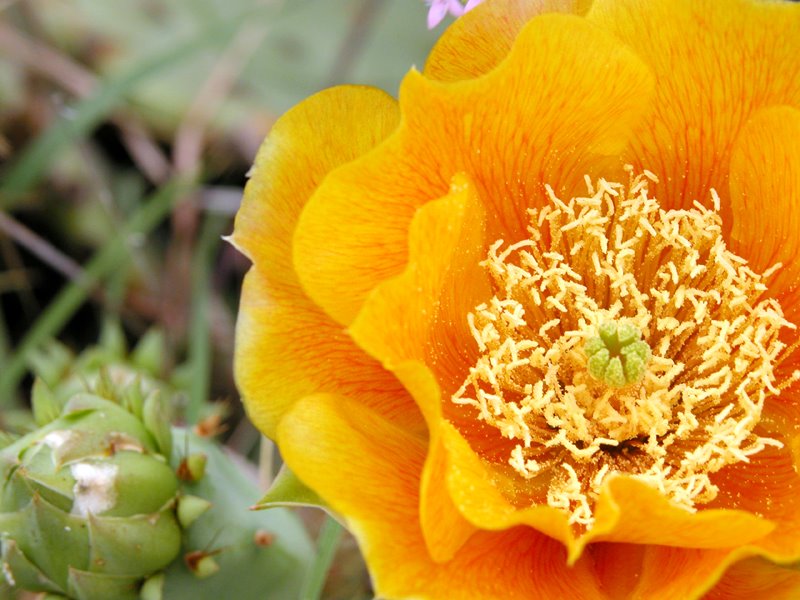
We Choose What We See

We choose what we see.

The generosity.
The accomplishments.
The promise.

Or the consequences.
The suffering.
The cost.

Yet what happens when we look beyond what we wish to see?

When one person holds enough wealth to influence governments, enough technology to connect or disconnect nations, and enough power to shape what millions see and believe,

who holds that person accountable?

We celebrate generosity, but do we question the power behind the gift?

We admire success, but do we consider its cost?

We praise those who build, but do we ask what happens when they choose to withhold?

Power is not inherently wrong.
Wealth is not inherently corrupt.
And generosity is not necessarily an illusion.

Yet none of these — places a person beyond accountability.

Power does not live only in the hands of the wealthy, the influential, or those who govern.

It lives in our homes,
our communities,
our relationships.

In what we possess,
what we withhold,
what we give,
and what we ask of others.

Each of us holds something another may not.

A resource.
A voice.
An opportunity.
A choice.

And when we have the power to affect another’s life,

who holds us accountable?

Responsibility travels in more than one direction.

In the hands that give.
In the hands that receive.

What moves us to give?

Compassion?
Recognition?
Loyalty?
Influence?
Control?

And what moves us to receive?

Need?
Gratitude?
Or the desire to have more?

Are we taking for the sake of taking, looking out only for ourselves?

Is it worth what we hold dear?

Perhaps the greater danger is not simply that some possess so much power,

but that we become so captivated by what they give that we stop questioning what they can take away.

For what we choose to see shapes what we believe.

And what we are willing to question shapes what we understand.

Perhaps accountability begins when we stop asking only what others should do

and begin examining what we are willing to excuse.

For when admiration
silences discernment,

and self-interest
silences conscience,

what are we choosing
not to see?

— a Torchbearer Wisdom by Corvalya

Never Let Fear Be the Hand That Steers

Fear has a purpose.

It warns us when something may be wrong.
It asks us to pay attention.
It can even move us to protect what we love.

But fear was never meant to steer.

When fear takes the wheel,
we begin to see one another through labels :

left and right,
believer and unbeliever,
citizen and stranger,
us and them.

And somewhere beneath those labels,
we forget the human being.

This is where presence matters.

Presence asks us to stay awake
without surrendering to fear.

To listen without becoming what we hear.
To question without dehumanizing.
To disagree without making an enemy.

Whenever someone tells us
that another group of people
is the reason we should be afraid,
we should pay attention.

Because once fear needs an enemy,
one enemy is rarely enough.

When one is gone,
another can always be named.

And another.

Until fear has consumed
the very thing it promised to protect.

There is another way.

We can come to the table
not first as parties,
identities,
faiths,
or ideologies,

but as human beings.

We will not agree on everything.

We do not need to.

We need enough common ground
to begin building together.

Fear only knows how to defend itself.

Presence can listen.
compassion can recognize another.
Courage can remain at the table.

And from there,
something fear could never create
becomes possible :

a way forward
that leaves room
for all of us.

— a Torchbearer Wisdom by Corvalya

When the Noise Falls Away

Perhaps the greatest deception
is not the lie we recognize.

It is the one
that arrives wearing the clothes
of something we already believe.

We are surrounded by voices
telling us whom to fear,
whom to blame,
what is being taken from us,
and who is responsible.

Fear does not care
which door it enters.

Perhaps the work
is to become quiet enough
to ask:

Can I recognize deception
when it confirms me?

Can I feel another’s loss
without becoming them?

Can I see their humanity
without requiring their sameness?

Can we find enough
shared ground
to thrive together?

Perhaps there is a place
where we can begin.

Loss.

We may disagree
about how another should live,
what they should believe,
or what makes a life worthy.

We may even convince ourselves
that what another loses
does not matter.

Until we remember
what it is to lose.

A home.
A livelihood.
A freedom.
Someone we love.
A future we thought was ours.

Loss strips away
the labels we give one another.

The grief of someone
we do not understand
is still grief.

The fear of someone
we would never become
is still fear.

Perhaps our shared humanity
begins there:

when I do not have
to become you

to understand
what it would mean

to lose
what you love.

Who have I decided
does not belong?

Whose lose
have I learned
not to mourn?

Whose freedom
matters less to me
because their life
does not look like mine?

Perhaps consensus
does not begin
with agreement.

Perhaps it begins
when we can see
the human being
before the label.

Then we can talk.

Then we can listen.

Then we can search
for what we still share.

Not asking
who must surrender
for the other to win,

but how we might live
with our differences,

care for what we share,

and find enough
common ground

not merely
to live beside one another,

but to thrive.

Because no one’s humanity
is the price

for another’s certainty.

— a Torchbearer Wisdom by Corvalya

What Kind of Ancestor?

I was resting on a park bench,
my cane laid beside me,
giving my weary bones a rest,

when a child came toward me
holding a beautifully colored leaf
she had found on the ground.

She held it out to me.

I looked at the leaf,
then into her eyes,

and suddenly became aware
of all the years
between us.

I had already traveled
so much of the road
she was only beginning.

And yet here we were,

an old woman,
a child,

and between us
a leaf.

Once it had been a bud,

then green,
opening beneath the sun.

Now autumn had colored it
and loosened its hold.

Soon it would return
to the earth beneath the tree,

becoming part
of what would grow
after it.

I looked again
at the child.

I had fewer years
ahead of me.

She had almost all of hers.

Yet my generation
was helping decide
the world
in which she would live in.

I thought of those
who came before me,

of the world
they had received

and the world
they had handed forward.

I am living
among their choices.

One day,
she will be living
among mine.

Perhaps age was never meant
to give us ownership
of the future.

Perhaps it was meant
to teach us
how to hand it forward.

The leaf rested
in my aging hand,

given to me
by a hand
still growing.

And for a moment,
the years between us
didn’t feel like distance.

They felt like a passage.

From one hand
to another.

From one generation
to the next.

I looked at the leaf
once more

and wondered —

What kind of ancestor
was before me?

And when it is my turn
to hand forward
what was placed
in my hands,

what kind of ancestor
will I become?

— a Torchbearer Wisdom by Corvalya

Responsibility of Seeing

There are moments when the world asks us to become accustomed to what should never become the ordinary.

We hear the cries.
We see the suffering.
We recognize the imbalance between those who hold power and those who bear its consequences.

And still, life continues around it.

Perhaps the danger is not only in what human beings are capable of doing to one another, but in how easily the unacceptable can become familiar.

Leaving the cave does not mean knowing how to fix everything we see.

It means being willing to see.

And once we see, we have a choice.

We can look away.
We can become accustomed to it.
Or we can allow what we have witnessed
to awaken something within us.

Conscience asks something of us.

Perhaps it is a voice.
A hand extended.
A truth spoken.
A vulnerable person protected.
A refusal to participate.
A small act of compassion where indifference has become easier.

We may not be able to change everything we see.

But we can choose what we will become because we have seen it.

Perhaps that is where change begins.

Not within the question,

When is it enough?

— a Torchbearer Wisdom by Corvalya

(Companion reflection: She Left the Cave — the moment before the eyes first opened.)

I Can’t Forget What I Saw

There was a time, not long ago, when we stopped.

Literally —

The skies were quiet.
Birds filled the silence.
Streets stood empty.

And in that stopping, we saw each other — not as sides, but as ourselves.

I saw it from the road.

Mailbox to mailbox, I carried what people could not reach — food, medicine, small pieces of ‘normal’.

Even in those quiet moments, we held those leaving their homes for the last time.

For a brief moment, we remembered.

Then …
division returned.

Voices rose.
Lines were drawn.

The egos of the powerful pulled us apart, and too easily we followed.

Now we argue over who is right and forget what is true.

But I can’t forget what I saw.

It was not an illusion.
It was a glimpse of who we are when we remember.

Will we wait for another crisis to see each other again …

or will we choose it now?

— a Torchbearer Wisdom by Corvalya

The Breaking Point of Becoming

When what is false collapses, what is real begins to emerge.

This moment — when what is diseased in the collective body can no longer sustain itself — is not confined to the outer structures of society, but reflects the hidden fractures within the soul. It’s the same turning point that every soul, every civilization, and every age must face.

It appears across many sacred and wisdom traditions — in the Bhagavad Gita, as the battlefield between duty and despair; in the scripture of the East and West, where the soul’s trials — the flood, the exile, the long night of return — echo the timeless passage from loss to renewal; in the teachings of indigenous paths, as the turning of seasons — death and rebirth held in one breath; in the Big Book and A Course in Miracles, as the surrender of ego’s illusion — the humbling before grace.

Each speaks its own language of transformation, yet all point toward a shared truth: that when what is false collapses, what is real begins to emerge — and in that breaking, consciousness begins to heal.

Corruption and complicity are not always external forces; they live in the unseen bargains we make with fear, comfort, and control. When we deny that inner decay, it spreads outward — shaping the institutions, relationships, and cultures we build.

But when we face it — honestly and collectively — the breaking becomes birth.

Every sacred text points toward that same revelation: that collapse is not the end of life’s story, but the way life renews itself.

— a Torchbearer Wisdom by Corvalya

The Bridge Between Us

Even when the world forgets how to cross, someone must remember how to build.

There comes a point in every conflict — personal, cultural, or spiritual — when speaking feels useless. Each side defends its own reflection so fiercely that truth itself becomes unrecognizable.

I have felt that ache: the longing to be understood, the futility to trying to pierce someone else’s illusion. It is easy, in that fatigue, to harden — to believe the bridge has fallen for good.

But sometimes I wonder: What might change if, before defending my truth, I first spoke the truth I see in the one I oppose?

Not to agree or surrender, but to honor the fragment of sincerity within their conviction.

Every illusion began, somewhere, as protection. To name that is not to excuse it, but to remember that even distortion is born from fear — and fear is only love that has forgotten its name.

It takes rare courage to speak truth into illusion, knowing it may be rejected or ridiculed. Yet the deeper courage is to do so without contempt.

Truth offered without tenderness becomes a weapon; truth offered with humility becomes an invitation — not to change another, but to keep one’s own heart from hardening.

When truth enters the world, it rarely arrives quietly.

It shakes what has settled and unsettles what pretends to be certain.

This trembling can feel like failure, yet it is often the soul’s first movement toward honesty. Not all disruption is destruction; some are the mercy that loosens what has grown too rigid to breathe.

There are two kinds of chaos. One divides to dominate; the other unsettles to reveal. We cannot always tell them apart, but intention knows.

If the fire in me seeks to illuminate rather than consume, even conflict can become a field of grace. The measure of success is not agreement, but the integrity of light that remains after the shouting fades.

So I no longer ask whether the world will listen. I ask only that I not lose the capacity to listen — even when it howls.

If I can stand in truth and still see the human being across from me, if I can let the noise pass through without losing my kindness, then perhaps I have built a bridge no power can destroy.

In the end, success is not the conquest of darkness, but the quiet endurance of light — the way love remembers itself when it refuses to give up.

— a Torchbearer Wisdom by Corvalya.

Where We Stood

”Stop the Hate”
”Stand for Humanity”
”Vote for the Future”
“Make Love Not War”
”Democracy Is Not a Spectator Sport”

There were many more signs — and they more than words written on cardboard. They were offerings of hope, lifted by strangers who still believe we can become better together.

I walked among them — elders with canes, students with cameras, artists with open hearts — all carrying the same seed: faith in one another. The air hummed with courage, not anger; with conviction, not contempt.

Of course, there were those who pushed back — engines roaring, voices raised. But even that felt familiar. It reminded me of the bully at school — loud because he’s lonely, cruel because he’s afraid.

And in that remembering, I felt the deeper call: not to react, but to hold space. To see the hurt beneath the noise. To believe that even in our fractures, something tender can still grow.

Because democracy isn’t a battlefield.

It’s a garden — fragile, untamed, yet still capable of blooming when we choose to tend it. It asks not for perfection, but for participation. Not for agreement, but for attention.

As I waited at a light to leave, a young woman sat in the car beside me, both our windows down. We glanced at each other — just a moment, but enough.

”Remember to vote,” I said.

She smiled. ‘I am.”

And in that small exchange — in those many exchanges — in the meeting of breath, hope, and simple decency — I realized this is where democracy truly lives: in what grows between us.

Because We the People are not just a phrase from history.

We are the soil itself. The future — the love, the justice, the peace we long for — and only grow from how we tend each other now.

— a Torchbearer Wisdom by Corvalya

The Refusal to Go Blind

They call it madness
to feel too much,
to see what others bury,
to whisper “this is not love”
while the world applauds
its hollow kings.

But maybe the truly mad
are the ones who dance
around the emperor’s altar
and call their fear devotion.
— Corvalya

There comes a time when the soul cannot pretend any longer.

The world insists that everything is fine — that illusion is order, that success is virtue — but the heart knows otherwise. It sees the rot beneath the polish, the hunger behind the applause.

Those who still feel, who still ache for what is true, often carry a quiet loneliness. It isn’t sickness — it’s sight.

In a culture that worships the image and forgets the essence, empathy becomes rebellion. Integrity becomes exile.

And yet, this is not despair.

It is a calling.

The unease you feel is not weakness; it is your spirit remembering itself.

It is the tremor of conscience in a time of convenience. It is what keeps your inner eyes open when the world begs for blindness.

Fear whispers … stay small, stay silent, stay safe.

But if every torchbearer hides their light, who will guide the lost home?

To refuse blindness is to live as witness — not in arrogance, but in love. To see clearly and still choose compassion — that is the rarest courage.

Those who once stepped from the cave know this light well.

It does not ask us to abandon the shadows we’ve known, but to walk with them — to let what once blinded us become the very light by which we now see.

You were not made to serve the masquerade. You were born to unmask it with mercy.

— a Torchbearer Wisdom by Corvalya

(Companion reflection: She Left the Cave — the moment before the eyes first opened.)